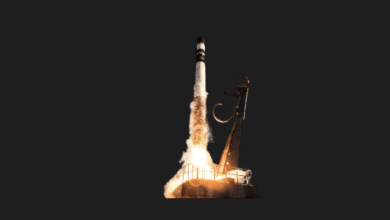

I have to admit, when I first looked over the launch manifest for SpaceX’s recent Falcon 9 Transporter-17 mission, I thought it was just another routine batch of satellites heading into low Earth orbit. But as I dug into the details, I stumbled upon a payload that genuinely made me stop and reread the press release. We have officially launched the world’s first commercial nuclear-powered payload into space.
If you are imagining a massive, glowing green reactor floating above our heads, don’t worry—I thought the exact same thing at first. But the reality of the BOHR mission by City Labs is actually much more fascinating, and far safer, than sci-fi movies would have us believe. Here is why I think this tiny satellite is about to change the way we explore the cosmos.
Meet BOHR: The Tiny Nuclear Pioneer

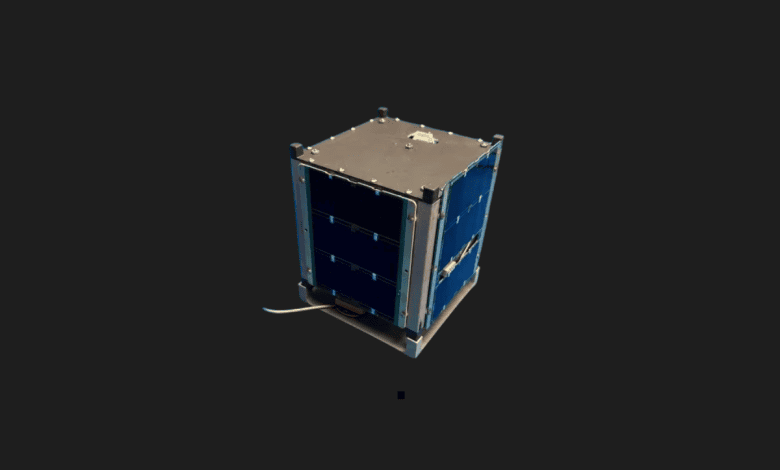
The BOHR satellite is a CubeSat weighing in at under 6 kilograms. While the satellite itself uses standard solar panels for its main operations, the experimental payload it carries runs completely independently on a NanoTritium Betavoltaic power system.
Think of it not as a nuclear reactor, but as a highly advanced nuclear battery.
Unlike the massive Radioisotope Thermoelectric Generators (RTGs) we put on deep space probes like Voyager 2—which generate electricity from the intense heat of decaying plutonium—this betavoltaic system generates electricity directly from beta decay.
Wait, Isn’t Nuclear Energy in Space Dangerous?

Whenever I hear “nuclear” and “space” in the same sentence, my mind instantly goes to the Kosmos 954 disaster. Back in 1978, a Soviet satellite carrying highly enriched uranium-235 crashed into the Canadian wilderness, scattering radioactive debris over 600 kilometers. It caused a massive diplomatic crisis and a terrifying cleanup operation.


So, why am I not worried about BOHR? It all comes down to the fuel.
- No Heavy Elements: Instead of using dangerous uranium or plutonium, BOHR runs on trityum (a radioactive isotope of hydrogen).
- Zero Explosion Risk: The tritium gas is securely trapped inside a solid metal hydride foil. Even if the satellite were to break apart, there is no risk of a radioactive explosion or toxic leak.
- Human-Safe: The beta particles emitted by tritium are so weak that they cannot even penetrate human skin.
Why I Believe This is a Game-Changer

You might be wondering, “If we have great solar panels now, why bother with nuclear batteries?” I asked myself the same question, but the advantages are actually incredible:
- 20 Years of Uninterrupted Power: Tritium has a half-life of about 12.3 years. This means City Labs’ NanoTritium system can provide continuous, uninterrupted power for over two decades.
- Immunity to Darkness: Solar panels are useless in deep craters on the Moon, during Martian dust storms, or in the outer edges of our Solar System. These nuclear batteries don’t care if the sun is shining.
- Commercial Independence: The US Department of Defense is heavily backing this because they want power sources that are durable, safe, and independent of sunlight for future satellite networks. By proving this works commercially, City Labs is breaking down the massive regulatory walls that have kept nuclear technology locked up in government labs for decades.
This mission feels like a quiet turning point. We are moving away from the dangerous, bulky nuclear systems of the Cold War and entering an era of safe, sustainable, and commercially viable nuclear batteries.
I can easily see a future where swarms of deep-space probes are powered by these tiny, harmless batteries, mapping out the darkest corners of our solar system without ever needing to see the sun.
What about you? Would you feel comfortable knowing thousands of next-generation commercial satellites orbiting above our heads are powered by tiny nuclear batteries, or do you think we should stick strictly to solar power? Let me know your thoughts!
You Might Also Like;